Monday
Aug272012
Yosemite's Fabulous Night Skies
Acclaimed filmmaker Steven Bumgardner looks at the night skies over the High Sierra.



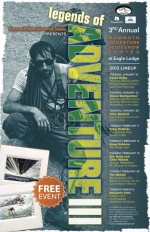 Mammoth Mountaineering's


Death Valley's Secret Stash
(Men's Journal)

Really Old Masters
(NY Times)

The World's Most Traveled Man?
(Men's Journal)

Skiing CA's 14ers
(Eastside Magazine)

Wild Ice
(NY Times)

Rituals: The Last Run
(NY Times)
More...
Eastern Sierra Time Lapse HD from Jeff Chen Kuo Chih on Vimeo.
According to filmmaker these images were made over a "4-day trip through the California Sierra, from Mono Lake through Death Valley..."
Tools: Nikon D3, Stage Zero Dolly + MX2, iMovie.
Eastern Sierra Time Lapse 2 from Jeff Chen Kuo Chih on Vimeo.
According to filmmaker these images were made during "a second 6-day trip through the California Eastern Sierra, from 350 feet below sea-level at Badwater in Death Valley National Park to 12,000 feet above, in the Ancient Bristlecone Pine Forest. Very exhausting trip with only few hours sleep a day. The weather kept changing very suddenly, from sunny to stormy and back. Gusts of wind blew up several of my night time scenes."
Tools: Nikon D3 and D5100. Stage Zero Dolly + MX2, iMovie.
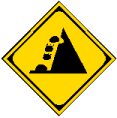 ON THE AFTERNOON OF OCTOBER 7, 2008, a section of the granite cliff below Glacier Point suddenly and without warning broke free, dropped over 1,000 feet to the valley floor, like Derrick Dodd's chicken, like Galileo's hammer, like Dorothy's house in the Wizard of Oz, and crushed an empty tent cabin. Amazingly, no one was hurt. The relevant (read: exposed) portion of Curry Village was hastily evacuated.
The next morning another slab cleaved off — perhaps six or seven times larger than the first — snapping trees like matchsticks and wrecking several more tent cabins. Together, the two events involved 6,000 cubic meters of Yosemite's world-famous granodiorite. Within about six weeks the Park Service had made its assessments and decided on the permanent closure of approximately one third of Curry Village: "233 visitor accommodations, associated visitor support structures (shower house, restrooms, etc.), and 43 concessioner employee housing units."
"Since the retreat of the glaciers about 15,000 years ago," says Greg Stock, park geologist, in Steven Bumgardner's terrific new Nature Notes video on the subject (see below), "rock fall has been the major force shaping this landscape." Remarkably, given the amount of granite overhead, only 14 or 15 people have been killed in the 150 years of white man history in Yosemite Valley by having the stuff fall on their heads.
Many, many more park visitors have met their maker beneath the rushing waters of the River of Mercy, or behind the wheel of the family automobile. Still, it certainly gives one the urge to look up...
Chris Davenport | Skiing Eastern Sierra's 14ers [Part1] from Backbone on Vimeo.
Davenport in the southern Sierra as he tries to become the first person to ski all the 14ers in the lower 48. For an account of his first stab at CA's big 14ers in 2009, see Skiing California's 14ers (Eastside Magazine). And a gallery of Pondella shots here.
 Post a Comment